Falling in love with a city

In September 2015, I travelled for the first time to Basel, Switzerland, for a job interview. I arrived the day before and, despite the jet lag, decided to make use of the few hours I had to explore the city. Since the company paid for my flight and accommodation, I had to return to Singapore on the evening of the interview day.

I went to see the Basel Münster and remember standing on Münsterplatz, walking on the cobbled stones, taking photos of the old buildings with their green and maroon windows. I had a feeling it would be a nice place to live, and that I should do well in the interview the next day.

After ten years of living in Basel, I would still agree with my earlier self. With around 180,000 people, it is a relatively small city compared to those known even outside Europe. Basel is small, but it is sufficient. There is no wild nightlife, but at this stage in my life—and to be honest, at any stage in my life—that doesn’t really matter. Basel, in my humble opinion, has everything one needs for a good quality of city life—well, at least mine.

In my part of town, the Rhine provides an almost car-free third place to enjoy nice weather. In summer, it turns into a concrete beach where locals walk around, sometimes in their swimming attire, carrying colourful fish-shaped bags. With my current skills, Rhine swimming is sadly an activity I have yet to try. I do, however, look forward to hanging out by the river on a sunny summer evening after work, enjoying a can of Appenzeller Ginger Beer. When it gets warmer, small buvettes pop up selling drinks and light snacks.

Fasnacht in winter, Herbstmesse in autumn, and the Christmas Market in December are key events I try not to miss every year. One could write several articles about Fasnacht alone. For me, it is the three days a year when the whole city turns into one living, moving, breathing artwork. The costumes, artistry, and stamina of the people during Fasnacht never fail to fascinate me. Fasnacht is chaos at its most beautiful.

For a normal human being who works five days a week, the part I miss most when I travel is how walkable Basel is. One could walk for hours along the Wiese or the Rhine, through the streets of Gellert or within the old town, without having to stress about cars. This also means that when you go for a walk or a run, you breathe mostly unpolluted air. Petty crime does exist, but it is generally low, which gives you peace of mind when you are out and about, even at the wee hours of the night.

There is a long list of small things I could talk about when it comes to Basel, but for now it suffices to say that I can imagine myself spending another ten years of my life here—possibly more.
Kesch Trek++

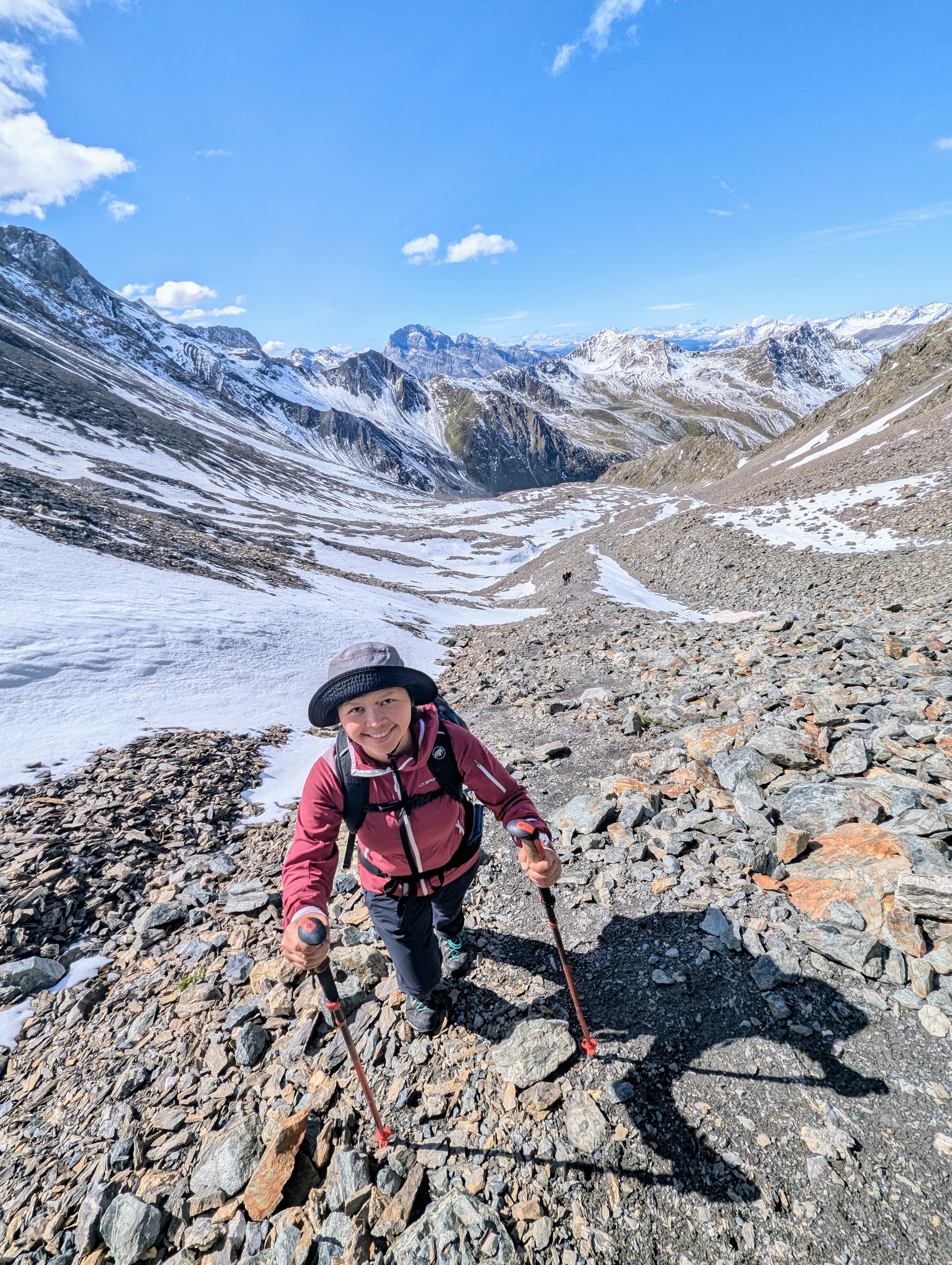
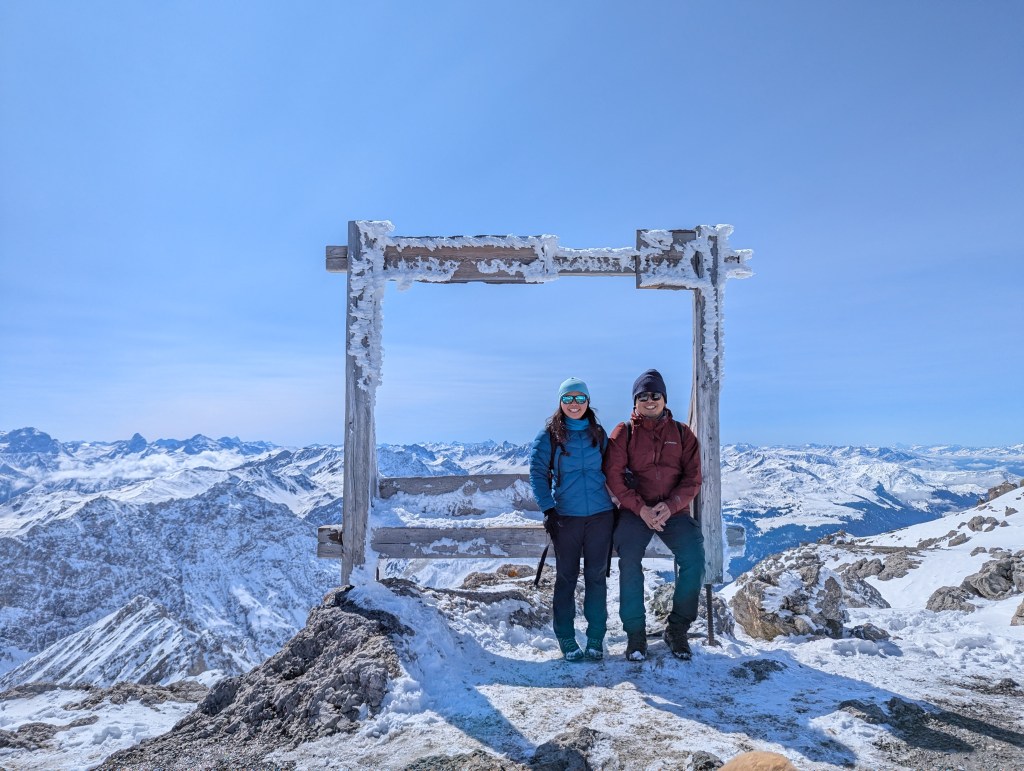
Taken very close from Fuorcla Pischa on the way to Chamanna d’Es-cha

For the past 9 years I’ve been living in Switzerland, I estimate to have done more than a hundred hikes. In the early years, I would join hikes organized by the Hiking group of the Bank or friends including some when I would have been picked up in the morning in Basel and returned on the same spot in the evening. In the last couple years, I’ve been planning more of the hikes I do with friends and family. This process takes a couple of hours, sometimes days! What I realize over the years, is that there’s not a lot of content in English about hikes in Switzerland. Inspired by Wander We Go, I’ve decided to document the hikes I’ve done, if not for my future self, perhaps for someone who is need of ideas for what to do the next sunny weekend.

I will start with a week-long trip I did with my best friend on September 2024 at one of my favourite areas in Switzerland – Engadin. I found Kesch Trek on Wander We Go’s website but added a day to do the Joriseen lake hike and changed the last day’s hike. Spoiler: we didn’t manage to do see the lakes due to the unusual winter conditions in the area the week of our trip in September!

I summarize our plan below including the planned but had to cancel days. Note that the time mentiones below does not include breaks and photo ops 🙂

DayAccommodationActivityTechnical Details
1 – Planned but had to cancelFlüela Hospiz, PasshotelJöriseen Lake Hike (Swiss Family Fun)10.8 KM
750m up / 750m down
Time: 05:05
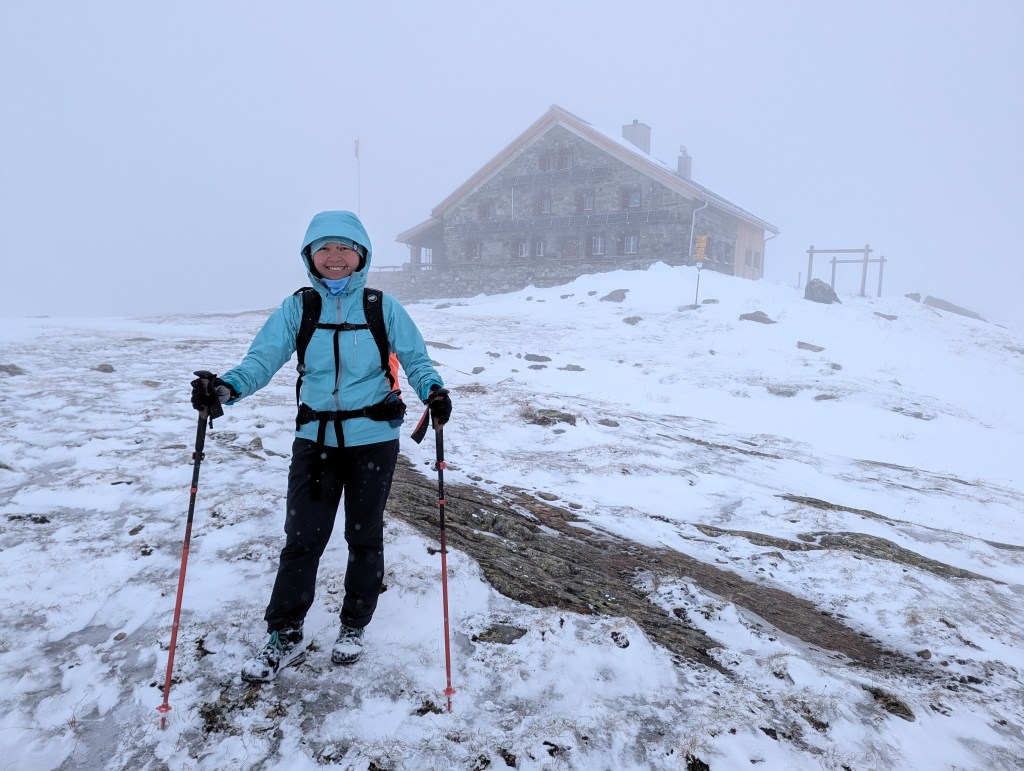
1 – ActualAlpine Inn DavosTouristic activity and short winter hike from Weissfluhjoch to HöhenwegToo touristic for technical details 🙂
2 – Planned but had to cancelHike from Flüela, Ospiz to Grialetsch Hütte10.9 KM
1037m up / 885m down
Time: 04:47
2 – ActualGrialetsch HütteWinter hike from Dürrboden to Grialetsch Hütte4.2 KM
558m up / 19m down
Time: 02:27
3 Kesch HütteHike from Grialetsch to Kesch Hütte 13 KM
857m up / 788 down
Time: 04:37
4 Chamanna d’Es-chaHike from Kesch Hütte to Chamanna D’Es-cha14 KM
1044m up / 1080 down
Time: 05:26
5Home Return from d’Es-cha to close-to Porta d’Es-cha then down to Zuoz10.66 KM
377m up / 1277m down
Time: 04:38

Kesch Trek is a multi-day hike which have been marketed recently even outside Switzerland. In fact there were four other Dutch groups/couples doing the same path as us during our trip. We wanted to start with a bang by visiting the Jöriseen lakes and walking up a 3000-der peak on the way to the first hut of the trek – Grialetsch Hütte. We instead had to take a short but very interesting hike from Dürrboden. There was knee-deep snow in some places and I wished I brought my gaters. Otherwise, I was pleased to know that I could hike comfortably in these conditions using only my summer gear.

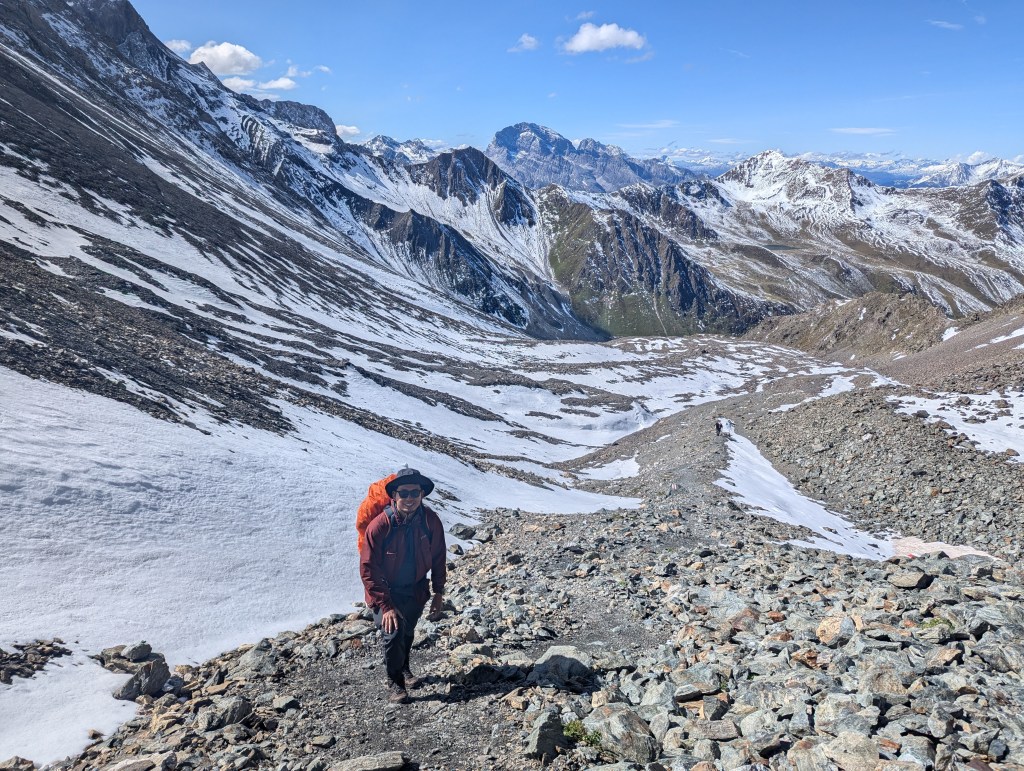
The Kesch Trek is for sure one of the most interesting hikes I’ve done in Switzerland. The views are fantastic, the trail include unbelievably beautiful valleys, rocky terrains, breath-taking, and sometimes very steep passes (Fuorcla Pischa). We saw cows (of course), horses and lots of marmots in the valley. The trail difficulty is between T2 and T3.

All the huts we stayed in were renovated in the last 5 years or so and offered basic amenities including showers (not for free though). The huts were in fantastic locations, super clean, and the food we had was hearty and delicious. The weather during our trip definitely made it more special. At Chamanna d’Es-cha, we even met two of few mountain uni-cyclists in the world!

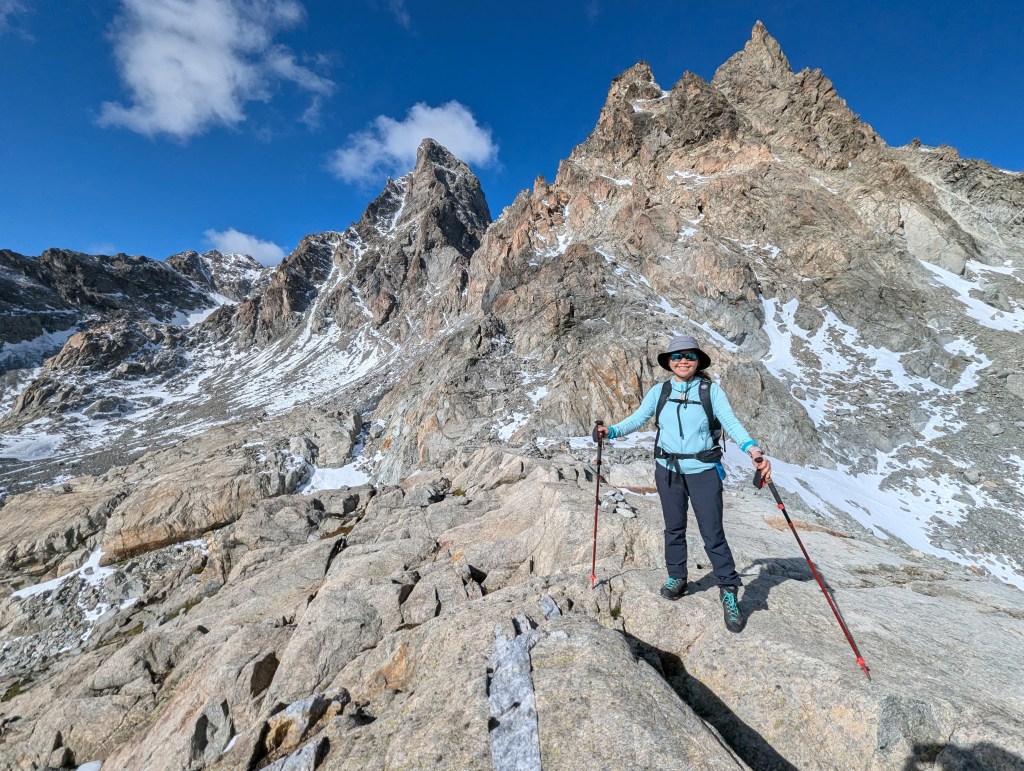
On our last day, instead of walking down from the hut to the train station, we did a return trip up to close to Fuorcla d’Es-cha. It’s officially a blue trail but I think only if you do the pass, which some crazy people did! It was not advisable, again because of snow on the pass. We walked very close to it until we didn’t see any reasonable path to continue on. Either because it’s a blue trail or a weekday, not many people were there. In fact, we only heard voices from the pass but didn’t really see them. The terrain up there is rocky and the view down is amazing on a sunny weather.

The Kesch Trek is designed such that you end at Preda, but we took Wander We Go’s advise and walked down to the closest train station instead. This way we could spend the time to do the return trip to the pass.

The toughest part of the trip for me was the uphill climb to Fuorcla Pischa. It was steep up and rocky, but I didn’t feel it was dangerous. It’s really more that you have to have the stamina to continue walking until you reach the windy pass. The view from there is definitely worth the effort. Otherwise, the rest of the trail was relatively easy and enjoyable although I should mention that whenever there’s an option to walk on a valley or a single-lane-path carved on the side of a mountain, we consciously chose the less exciting but much safer valley walk.